

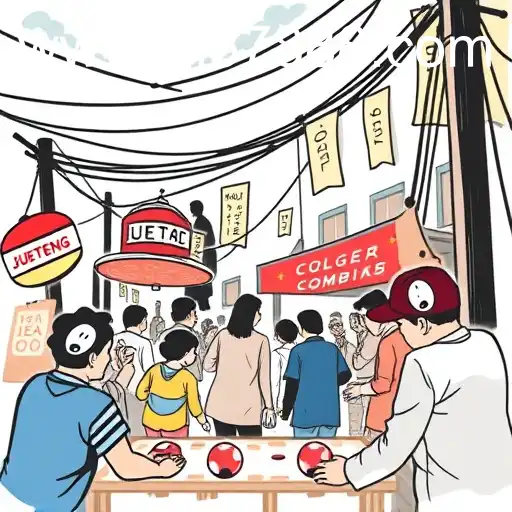

Jueteng holds a notorious place within the realm of gambling in the Philippines. Despite its illegal status, this numbers game has embedded itself deeply into Filipino culture, often intertwining with socio-economic issues, politics, and law enforcement. Understanding this complex phenomenon requires an exploration into its origins, cultural implications, and the difficulties faced in its regulation.
The origins of Jueteng can be traced back to the Chinese game of the same nature during the Spanish colonial period. This enduring gambling activity involves selecting a pair of numbers from 1 to 37 and placing bets on these combinations. Draw results are determined twice daily, spurring excitement and anticipation among participants. Conducted mostly in secrecy, Jueteng operations are run by financiers known as "jueteng lords," while bet collectors or "cobradors" serve as the vital link to bettors.
Jueteng has ingrained itself into the cultural tapestry of Filipino society, particularly in rural and urban areas where economic opportunities are limited. The allure of Jueteng lies in its accessibility and the immediate, though often small, rewards it offers. For many Filipinos, participating in the game provides a semblance of hope, and the possibility of improving their financial situation with minimal investment. As a result, Jueteng acts as an informal economic activity that contributes to the local economy.
Its persistence is also fueled by its integration into social practices. Often, the game is played in communal settings, with neighbors betting together, thus strengthening social bonds. These gatherings provide a platform for social interaction, networking, and collective dreaming for a better future. Despite its illegal status, Jueteng's social utility sustains its widespread appeal and endurance.
The illegal nature of Jueteng has persisted largely due to systemic corruption and regulatory challenges. Authorities have long sought to dismantle Jueteng operations, but have faced formidable obstacles. Law enforcement officers are sometimes complicit, with some allegedly receiving protection money from Jueteng operators. This corruption within the system undermines anti-gambling efforts, making it difficult to eradicate.
Attempts to suppress Jueteng focus on enhancing law enforcement measures and promoting authorized gaming alternatives like the Philippine Charity Sweepstakes Office (PCSO) Lotto. These measures aim to contain illegal gambling activities and transform them into sources of government revenue. However, achieving this remains a significant challenge due to the deep-rooted connections between Jueteng and various political entities.
In the political arena, support for, or opposition to Jueteng can influence electoral outcomes. Candidates seeking votes might turn a blind eye to Jueteng activities, pandering to communities where the game is rampant, as cracking down on Jueteng could alienate potential voters. Some politicians have even been accused of funding their campaigns through Jueteng profits, further complicating efforts to abolish the practice.
This political dimension underscores Jueteng's entrenchment in Filipino society, transforming it from a mere numbers game into a potent political tool.
The influence of Jueteng extends beyond the economic and political spheres into social dynamics, where it often exacerbates issues of poverty and inequality. With many low-income individuals participating in the hope of financial gain, the financial losses from Jueteng can push vulnerable populations into deeper economic distress. This cycle of poverty only reinforces the game’s prevalence, creating a continuous loop of risk and reward.
Moreover, the perception of Jueteng as a "harmless" or even benign activity challenges its complete eradication. For many, the negatives are ovshadowed by the social engagement and occasional winnings, allowing it to persist despite considerable opposition. This dual nature of Jueteng, as both a social adhesive and a source of potential ruin, highlights the broader challenges faced by stakeholders aiming to address its implications.
Jueteng remains a contentious issue in the Philippines, embodying the intersection of cultural practices, socio-economic challenges, and political intricacies. While efforts to combat it continue, the game's tenacity suggests a need for a nuanced approach that addresses the underlying socio-economic issues. The complex weave of tradition, hope, and financial aspiration surrounding Jueteng continues to challenge those who wish to see its end, posing a critical question for future regulatory and social reforms in the country.

Dive into the thrilling world of BeachFun, where strategy meets adventure, and discover what makes this game stand out amid current events.

Discover the immersive world of FarmTown. Dive into its gameplay features, rules, and community impact.

Explore the captivating world of GaneshaJr, a strategic game rooted in rich cultural heritage and modern-day relevance, with insights into its rules and gameplay.

Explore FortuneHook, a captivating new game with intriguing mechanics, set against the backdrop of current global gaming trends. Learn about the gameplay rules and how FortuneHook is shaping the future of gaming entertainment.

Explore the exciting world of JuicyGemsBonusBuy, a game that combines vibrant graphics, engaging gameplay, and unique bonus features. Our comprehensive guide delves into its rules, strategies, and what makes it stand out in today's gaming landscape.

Explore the captivating world of RunesOfDestiny, a game that merges fantasy and strategy, capturing the spirit of modern gaming and current events.
